Bathroom cabinets become crowded quickly because small bottles, towels, grooming tools, cleaning products, and backups compete for limited space. The solution is rarely adding more containers. Better results come from separating daily essentials from occasional supplies and using cabinet height more deliberately.
A bathroom cabinet should make routine items easier to reach while keeping backups contained and visible.
Sort Bathroom Items by How Often You Use Them
Start with daily products such as toothpaste, skincare, hair products, and grooming supplies. These deserve the easiest shelves or drawers.
Weekly products can sit slightly farther back, while unopened replacements and rarely used items can occupy secondary storage. Applying basic home storage principles helps prevent prime cabinet space from being consumed by products that may not be needed for months.
Check What No Longer Belongs There
Empty packaging, expired products, nearly identical duplicates, and items nobody uses create silent clutter. Remove them before adding organizers.
Cleaning first also reveals the true amount of available shelf and drawer space.
Turn Tall Cabinet Gaps Into Useful Storage
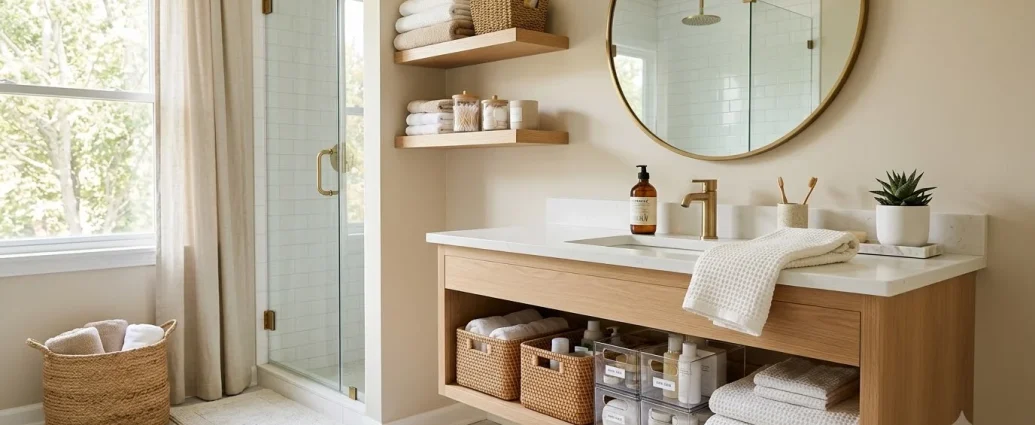
Under-sink cabinets often contain large vertical gaps above short bottles. Stackable bins, shelf risers, or drawers can convert that height into multiple usable levels.
The challenge is preserving access to plumbing. Good compact storage layouts leave pipes and shutoff valves reachable rather than packing containers tightly around them.
| Bathroom Item | Storage Method | Best Location |
|---|---|---|
| Daily toiletries | Small open bin | Front shelf |
| Backup products | Labeled container | Upper or rear area |
| Hair tools | Heat-safe holder | Drawer or side zone |
| Cleaning supplies | Stable caddy | Lower cabinet |
Contain Small Items by Category
Loose cotton swabs, razors, clips, dental products, and travel-size items can make an entire cabinet appear disorganized. Grouping small pieces prevents them from spreading into every available gap.
Choose containers that are easy to remove as a unit. Broader household storage inspiration can be adapted here by using a simple rule: one container should represent one recognizable category whenever possible.
Keep Backup Supplies Together
Extra soap, toothpaste, shampoo, and similar supplies should live in one defined backup area. This makes it easier to see what you already have before shopping.
Without a designated zone, duplicates tend to disappear behind everyday products.
Use Doors and Drawers Carefully
Cabinet doors can hold lightweight organizers for brushes, small bottles, or cleaning accessories when hinges and clearance allow. Drawer dividers are useful for cosmetics and grooming tools.
Avoid hanging heavy organizers that strain hinges or interfere with shelves. Every storage improvement should make the cabinet easier to operate, not merely increase the number of items inside.
Where Bathroom Storage Can Go Wrong
The biggest mistake is treating every available inch as storage capacity. Under-sink plumbing needs clearance, frequently used products need room to be removed, and some electrical grooming tools require safe handling after use.
Deep baskets can also hide products at the bottom. If you routinely forget what’s inside a container, it isn’t solving the visibility problem. Shallow, clearly grouped storage is often more practical.
Frequently Asked Questions
How do I organize a bathroom cabinet under the sink?
Work around the plumbing rather than covering it. Place stable bins or drawers on either side, keep essential shutoff access clear, and reserve the easiest front section for items used regularly.
What bathroom items should not be stored in deep bins?
Small products used frequently are poor candidates because they become difficult to see and retrieve. Deep bins are generally better for larger backup items, extra towels, or supplies that naturally stay grouped.
How can I keep bathroom cabinets organized long term?
Give daily items fixed locations, keep backups together, and return products immediately after use. Avoid adding new organizers unless a recurring storage problem appears. Periodic removal of empty or unused products also prevents crowding.
Protect the Space Around Your Essentials
Bathroom storage improves when access matters more than maximum capacity. Put daily products where they’re easy to reach, contain small items by purpose, use vertical space without blocking plumbing, and keep replacements in one visible zone. The result should be a cabinet that opens easily and shows you what you have without requiring a search.