A crowded room doesn’t always contain too much furniture. Sometimes the problem is simply where each piece sits. Small room layouts can feel significantly more open when walking paths, furniture angles, and visual boundaries are adjusted without removing useful items.
The first priority is movement. If everyday routes require squeezing around corners or stepping sideways, the layout needs work.
Identify the Main Walking Route
Think about how people naturally move from the doorway toward seating, windows, storage, or another room. That route should remain as direct as possible.
Furniture placed across the natural path creates friction even when enough floor space technically remains.
Stop Treating Every Wall as a Parking Space
Pushing everything against the perimeter can create a hollow center while still leaving awkward movement near doors and corners.
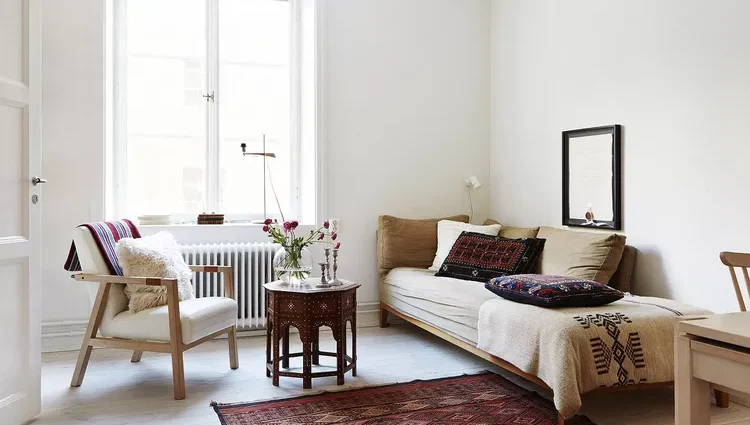
Pulling a chair slightly inward or floating a small sofa may actually produce clearer zones and better circulation.
Group Furniture Around Its Purpose
Instead of positioning each piece individually, create functional groups. Seating should relate to seating. A reading chair should connect with a lamp or table. A desk should have enough clearance to work comfortably.
Many small-space design ideas rely on these relationships rather than trying to maximize empty square footage.
| Layout Issue | Better Adjustment | Result |
|---|---|---|
| Blocked doorway | Shift furniture sideways | Easier entry |
| Empty center | Float seating slightly | Clearer zone |
| Tight corner | Angle one piece | Smoother movement |
| Scattered furniture | Create groups | Better purpose |
Use Angles Only When They Solve Something
Angled furniture can work in an awkward room, but random diagonal placement often wastes space. Use an angle when it opens a walkway, responds to a fireplace, or improves the view.
A comfortable arrangement should still feel visually settled. Looking at relaxed room layouts can offer useful ideas for maintaining comfort while improving circulation.
Pay Attention to Door Swing
Doors are easy to overlook during layout planning. A chair may technically fit beside an entrance but still interfere with the door or force people to walk around it.
The same applies to cabinet doors, drawers, and reclining furniture.
Create More Visible Floor
Seeing more continuous floor area can make a small room feel less crowded even when the furniture count stays unchanged. Raise visual weight where possible by using furniture with exposed legs or moving baskets and small objects away from walkways.
Natural furniture forms influenced by outdoor seating layouts can also show how open spacing between individual pieces keeps a grouping usable without making it feel scattered.
Avoid Chasing Perfect Symmetry
Small rooms often become awkward when every item is forced into a symmetrical arrangement. Matching chairs placed evenly on both sides of a sofa may look balanced but block useful circulation.
Another mistake is creating tiny gaps everywhere. A series of narrow unusable spaces between furniture pieces makes the room feel accidental. It is usually better to create one generous walkway than several cramped ones.
Frequently Asked Questions
Should furniture touch the walls in a small room?
Not necessarily. Leaving a small gap or floating selected pieces can improve the composition and create more functional groupings, depending on the room shape.
How can I make a small room easier to walk through?
Identify the route used most often and remove furniture corners from that path. Repositioning pieces by even a modest amount can noticeably improve movement.
Is a large sofa bad for a small room?
Not always. One appropriately placed large sofa may work better than several small chairs that create more gaps, corners, and blocked pathways.
Design Around Movement First
Keep the furniture you actually use, but make every piece justify its position. Protect the main walking route, group related furniture together, and remove unnecessary gaps that interrupt the floor plan.
A successful small room does not need to look empty. It needs to let people move naturally while keeping everyday activities comfortable.