Limited counter space can turn a simple recipe into a juggling act. Ingredients compete with appliances, dirty dishes occupy the preparation area, and cutting boards end up balanced wherever they fit. The answer isn’t always a larger kitchen. By removing permanent clutter, borrowing temporary surfaces, and organizing preparation in stages, you can create noticeably more room for cooking.
Decide What Truly Belongs on the Counter
Start with everything currently occupying the workspace. Coffee makers or toasters used every morning may deserve permanent positions, while blenders, mixers, and specialty appliances used occasionally usually do not.
Removing even two bulky appliances can create a useful preparation zone. Browsing kitchen efficiency ideas can also help you think about counters as active workspace rather than long-term storage.
Create a Daily-Use Test
Ask whether an item is used almost every day and whether storing it elsewhere would be inconvenient. If both answers are no, move it.
Decorative pieces should face the same test. A small kitchen can still have personality, but the primary counter should remain functional.
Add Temporary Work Surfaces
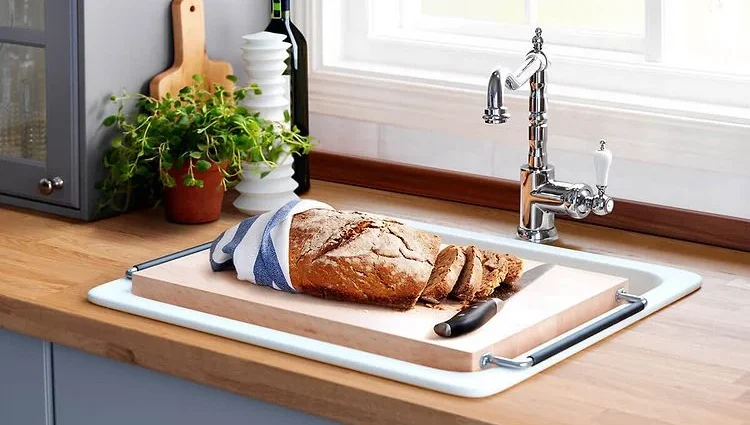
A large cutting board placed securely over part of the sink can create extra chopping space during meal preparation. Some stovetops can also accommodate purpose-made covers when completely cool and not in use, provided the product is suitable for the appliance.
A slim rolling cart offers another flexible option. It can support ingredients while cooking and move against a wall afterward. Similar everyday home planning approaches work best when furniture earns its floor space by performing more than one role.
| Space Problem | Possible Fix | Best Use |
|---|---|---|
| No chopping area | Sink-cover board | Food preparation |
| Appliances dominate | Store occasional units | Permanent counter recovery |
| Ingredients spread out | Rolling cart | Temporary staging |
| Dirty dishes pile up | Clear sink before cooking | Preserve prep space |
Prepare Ingredients in a Better Sequence
Counter congestion often comes from opening every package and setting out every tool before cooking begins. Instead, work in stages.
Wash and chop vegetables first, transfer them into bowls, clear the board, and then move to the next task. Keeping a small waste bowl nearby can prevent scraps and packaging from taking over the counter. Ideas involving surface and style choices can also be useful when selecting trays or containers that keep frequently used items visually contained.
Use Bowls as Temporary Holding Zones
One bowl can hold chopped ingredients while another collects scraps. This keeps loose food from spreading across the workspace and makes cleanup easier.
Move Storage Up Instead of Out
A wall-mounted rail, magnetic knife strip, under-cabinet holder, or compact shelf can move small items away from the counter. The biggest gains usually come from relocating things that currently occupy space every day.
Avoid adding so much wall storage that the kitchen becomes visually crowded. One targeted rail can be more effective than several unrelated organizers.
Common Space-Saving Ideas That Backfire
Buying organizers without measuring first can create a new form of clutter. A countertop shelf may technically double storage, yet it still occupies the exact surface needed for chopping.
Oversized rolling islands can cause the same problem. Extra counter area is useful only if there is enough room to move safely around it. The best solution increases usable workspace without making circulation harder.
Frequently Asked Questions
How much counter space do I need for basic cooking?
There is no single amount that suits every kitchen. What matters most is having one clear, stable area large enough for your main cutting board, ingredients, and immediate tools without constantly moving unrelated objects.
Should appliances be stored in lower cabinets?
Occasionally used appliances can be good candidates for lower cabinets if they can be lifted safely and conveniently. Heavy appliances may be better stored at a more accessible height.
Can a kitchen cart replace an island?
In many small kitchens, yes. A cart provides temporary preparation and storage space without permanently occupying the center of the room. Choose one that leaves comfortable clearance around doors, drawers, and walkways.
Protect One Clear Preparation Zone
Choose one stretch of counter and treat it as working space rather than storage. Remove occasional appliances, relocate small tools vertically, and use temporary surfaces only when needed. Limited counter space becomes much easier to manage when you stop asking the countertop to store everything and start protecting enough open room to complete one cooking task comfortably.