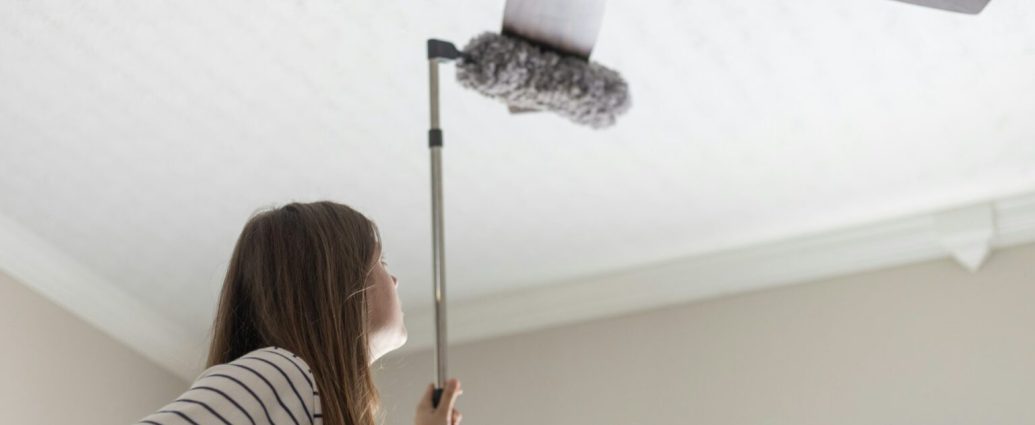
Ceiling fans can collect a surprising layer of dust along the leading edges and upper sides of their blades. Wiping that buildup carelessly may send particles across furniture, bedding, and floors. Dusty ceiling fans are easier to clean when the dust is contained before the blades are polished.
Set Up Before Reaching the Fan
Switch the fan off and wait until the blades stop completely. If the fan has a wall switch, keep it off while cleaning.
Use a stable step ladder designed for the required height. Never balance on chairs, tables, or furniture. If you cannot comfortably reach the fan without stretching sideways, use a long-handled duster or arrange safer access.
Fans also collect dust differently depending on furniture placement and airflow. Exploring practical room planning ideas may help identify layouts where fabrics, vents, and frequently used areas contribute to airborne dust.
Trap Dust Instead of Brushing It Away
A dry feather duster may remove visible buildup, but it can also scatter particles around the room. Containment works better when the fan hasn’t been cleaned for a while.
Use the Pillowcase Method
Slide an old pillowcase over one blade until it reaches the base. Hold the fabric lightly against the top and bottom of the blade, then pull the case outward.
Most of the loosened dust falls inside the pillowcase instead of onto the room. Repeat with each blade before shaking or washing the case elsewhere.
For a light layer of dust, a slightly damp microfiber cloth also works. Keep moisture away from the motor housing, electrical components, and light sockets.
Wipe the Blade Edges
Dust often sticks to the leading edge because that surface repeatedly moves through room air. After removing loose buildup, wipe the edge carefully with a clean cloth.
People collecting household maintenance inspiration can apply the same containment idea elsewhere: capture dust first, then perform detailed wiping rather than pushing debris from one surface to another.
| Fan Area | Cleaning Method | Main Precaution |
|---|---|---|
| Blade tops | Pillowcase or microfiber | Support blade gently |
| Blade edges | Damp cloth | Avoid heavy pressure |
| Motor housing | Dry microfiber | Keep moisture away |
| Light cover | Clean separately | Confirm bulbs are cool |
Finish the Room After the Fan
Even careful cleaning may release a small amount of dust. Wait a few minutes for airborne particles to settle, then vacuum or wipe surfaces below the fan.
This top-to-bottom cleaning order saves time. Cleaning tables and floors first only to dust the fan afterward creates unnecessary repeat work.
General home styling references may also help when choosing furnishings and storage arrangements that are easier to dust routinely.
Before restarting the fan, check that every blade is dry. Confirm that no cloth, tool, or cleaning item remains near the fixture.
Mistakes That Make Fan Cleaning Messier
Starting the fan to “blow the dust off” is one of the worst shortcuts. It redistributes the buildup throughout the room and may drive dust into curtains, upholstery, and corners.
Heavy pressure creates another problem. Ceiling-fan blades and brackets are designed to stay balanced. Pulling or bending a blade while cleaning can contribute to wobbling.
Spraying cleaner directly overhead is also unnecessary. Liquid can drip toward electrical areas or onto your face. Apply a small amount to the cloth instead.
Frequently Asked Questions
Why do ceiling fan blades get dusty so quickly?
Fan blades continually move through room air, where they encounter lint, skin particles, fabric fibers, and other household dust. Airflow patterns and static attraction can encourage material to accumulate along blade surfaces and edges.
Can you clean a ceiling fan with a vacuum?
A vacuum with a soft brush attachment can remove loose dust if you can use it safely without pulling on the blades. Avoid forcing a heavy hose against the fan or using equipment while standing in an unstable position.
How can you reduce dust buildup on ceiling fans?
Regular light cleaning keeps thick layers from forming. Reducing general room dust through vacuuming, washable fabrics, clean HVAC filters where applicable, and good housekeeping may also slow the amount that eventually reaches the blades.
Clean From the Top Down
A ceiling fan doesn’t need to shower the room with dust during cleaning. Turn it off, use stable access, contain buildup with a pillowcase or microfiber cloth, and clean the surrounding room afterward. A quick light wipe performed regularly is also far easier than removing a thick layer every few months.