Listing photos can make a usable room look cramped, dark, or poorly maintained. Because many buyers first encounter a property online, weak images can reduce interest before anyone walks through the door. Better photography begins with room preparation, natural lighting, cleaner compositions, and an accurate sense of how the home actually feels.
Prepare the Room Before Taking Pictures
Photography cannot fully hide clutter or awkward furniture placement. Clean the room first, clear countertops, straighten fabrics, remove unnecessary objects, and create visible walking space.
Large furniture can dominate a photograph more than it does in person. If a room looks crowded through the camera, temporarily remove a chair, side table, floor lamp, or other nonessential piece. People looking at broader property context may see many presentation styles, but simplicity usually photographs well.
Keep Personal Items Controlled
Family photos, paperwork, pet supplies, toiletries, cords, and small appliances can create visual noise.
You don’t need to erase every sign of normal life. The goal is to prevent personal belongings from becoming the main subject of the image.
Use Light Without Washing Out the Space
Open curtains and blinds when natural light improves the room. Turn on interior lights if they balance dark areas, but avoid mixing extremely warm and cool lighting when it creates strange color shifts.
Photograph at a time when sunlight supports the space instead of causing harsh glare. Outdoor areas also benefit from tidy preparation, and general outdoor presentation ideas may help inspire how you organize visible exterior spaces.
| Photo Problem | Likely Effect | Simple Correction |
|---|---|---|
| Dark room | Appears smaller | Add balanced light |
| Wide-angle distortion | Misleading size | Use moderate framing |
| Heavy clutter | Distracts from space | Clear surfaces |
| Crooked lines | Looks careless | Level the camera |
Choose Angles That Explain the Room
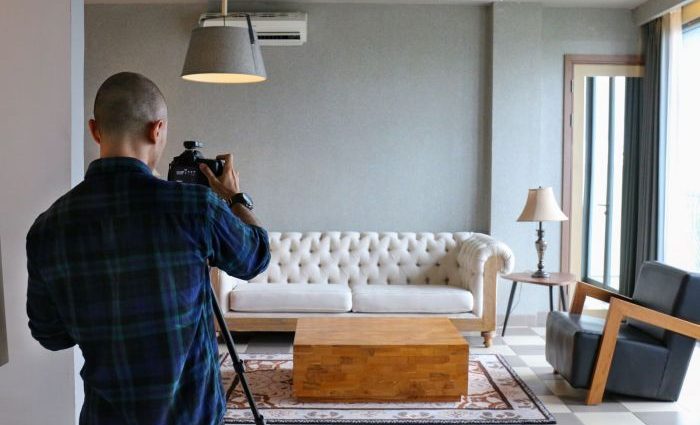
Stand where the photograph shows both depth and function. Corners often work well, but not every room needs the same angle.
Keep vertical lines reasonably straight so doors and walls don’t appear to lean. Extremely wide lenses can make a small room appear larger online but create disappointment during the showing. Accurate photography builds more useful buyer expectations.
Arrange the Interior for the Camera
Furniture placement should help viewers understand how the room works. A sofa blocking a doorway or dining table squeezed into a narrow path can make the layout seem harder to live with than it actually is.
Browsing general interior styling inspiration can provide visual direction, but listing photography should remain practical. Buyers need to see floor area, windows, entrances, storage, and room relationships more than decorative detail.
Photograph Important Features Clearly
If the home has a fireplace, built-in storage, updated appliances, attractive windows, or another useful feature, give it a clear photograph.
Don’t assume buyers will notice important details hidden in a wide room shot.
Mistakes That Make Photos Less Trustworthy
Over-editing is one of the easiest ways to damage listing credibility. Excessive brightness, artificial skies, stretched rooms, or aggressive color changes can create expectations the home cannot meet.
Another mistake is hiding every flaw through selective framing. Photographs don’t need to highlight imperfections, but they shouldn’t intentionally misrepresent the property. Strong listing images make the home understandable and appealing without creating a false version of it.
Frequently Asked Questions
Should all lights be turned on for real estate photos?
Not necessarily. Use lights when they improve balance and reduce dark areas. Natural daylight may be enough in some rooms, while other spaces benefit from interior lighting.
Is a phone camera good enough for listing photos?
Modern phones can produce useful images in good lighting, but composition and preparation still matter. Difficult interiors, low-light rooms, and higher-value listings may benefit from professional real estate photography.
Should listing photos show every room?
Most important rooms should be represented clearly. Small utility areas may need fewer images, but excluding major spaces can cause buyers to wonder why they weren’t shown.
Make Every Photo Explain Something
Treat each image as part of the buyer’s first tour. Improve lighting, remove distractions, show realistic room proportions, and choose angles that explain how spaces connect. Strong photographs don’t need to make the property look perfect. They need to make it look clear, cared for, and worth seeing in person.