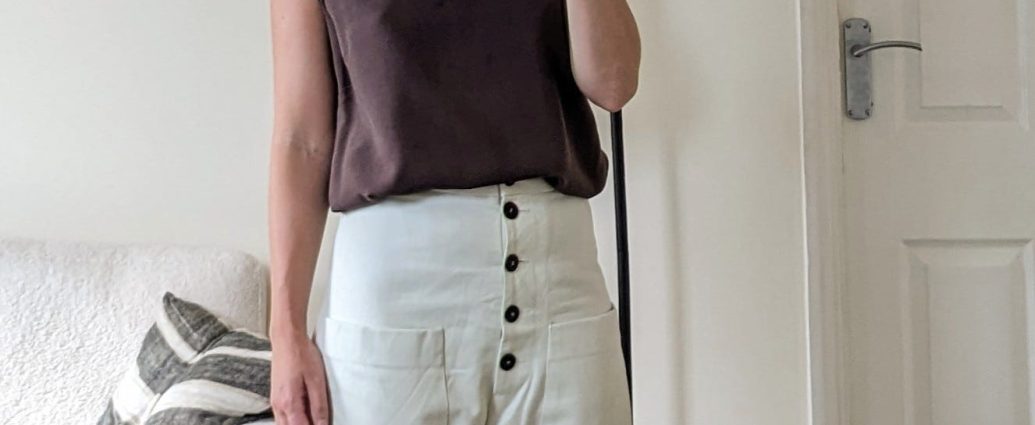
An outfit can contain attractive pieces and still feel visually awkward when the proportions compete. Long tops, wide trousers, oversized jackets, cropped hems, and fitted layers all change how the body is visually divided. Better balance comes from understanding how those shapes interact rather than following one rigid rule for every body or outfit.
Notice Where the Outfit Changes Shape
Start by looking at the overall outline instead of individual garments. Ask where the outfit becomes wider, narrower, longer, or shorter.
A long oversized sweater with very loose trousers creates volume from shoulder to ankle. That can be intentional, but if the look feels heavy, giving one area more definition can restore balance.
Looking at balanced outfit examples can make proportion differences easier to recognize than studying isolated garments.
Create Contrast Between Shapes
A roomy upper half often works well with a clearer lower silhouette, while wide-leg trousers can benefit from a shorter, tucked, or more fitted top.
This isn’t a mandatory formula. It is simply a useful place to start when an outfit seems shapeless.
Pay Attention to Visual Break Points
Where a shirt ends, trousers begin, or jacket stops changes how long each section of the outfit appears. Even moving a hemline slightly can alter the overall impression.
A long untucked top may hide the waist and shorten the visible leg line. Tucking part of the top or choosing a shorter layer can create a more deliberate break.
References featuring closet proportion ideas can help demonstrate why the same trousers look different with cropped, tucked, and long-line tops.
| Pairing | Possible Effect | Adjustment to Try |
|---|---|---|
| Long top + wide pants | Heavy silhouette | Shorter or tucked top |
| Cropped top + slim pants | Strong vertical line | Add longer layer |
| Oversized jacket + full skirt | High volume | Define waist area |
| Fitted top + wide trousers | Clear contrast | Keep accessories simple |
Use Layers to Correct Rather Than Complicate
Layers can help adjust proportion when their lengths are clearly different. A cropped jacket over a longer base, for instance, creates defined horizontal breaks and may give the outfit more structure.
Exploring everyday silhouette styling can offer ideas for combining different garment lengths without making the outfit look crowded.
Avoid stacking several layers that all end at nearly the same point. That can create bulk around one area instead of producing useful visual contrast.
Where Proportion Rules Can Mislead You
Advice such as “always balance loose with fitted” is convenient but incomplete. Some strong outfits intentionally combine oversized pieces throughout, while others use fitted clothing from top to bottom.
Fabric, drape, height of the waistline, footwear, and garment length all affect the final result. Treat proportion rules as diagnostic tools. If an outfit already feels balanced, there is no need to change it simply because it breaks a popular formula.
Check the Whole Outfit From a Distance
A mirror viewed from several steps away can reveal proportion issues more clearly than close inspection. You can also take a quick full-length photo and look only at the outline.
Notice whether one section appears unusually heavy or whether several hems cut across the body at awkward points. Then make one adjustment—tuck, cuff, change a layer, or switch shoes—and compare again.
Frequently Asked Questions
How do I know if my outfit proportions look balanced?
Look at the overall silhouette. If one area appears unintentionally heavy, compressed, or disconnected from the rest, changing garment length or volume may improve the balance.
Do oversized clothes always need fitted pieces?
No. Oversized pieces can work together when their drape, length, and structure create an intentional silhouette. Contrast is helpful, but it isn’t mandatory.
Can shoes affect outfit proportions?
Yes. Bulky sneakers, slim flats, boots, and heels create different visual weight at the bottom of an outfit and can change how trousers, skirts, and dresses appear.
Adjust the Shape, Not Your Entire Wardrobe
When an outfit feels awkward, replacing the clothes is rarely the first move. Examine where volume sits, where hems divide the silhouette, and whether one section dominates unintentionally. A small change in tucking, garment length, layering, or footwear can often turn an uncomfortable pairing into one that looks deliberate.