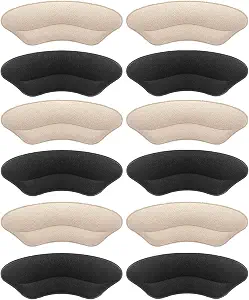
Loose heel shoes can make every step feel unstable as the back of your foot lifts away from the shoe. A carefully chosen heel grip, insole, or tongue pad can improve mild fit problems without forcing you into a smaller size that pinches elsewhere.
The goal isn’t to fill every empty space. It’s to hold the foot more securely in its natural position.
Why Heels Slip Inside Shoes
Heel movement can happen when a shoe is slightly too large, the heel cup is too wide, or the overall shoe shape doesn’t match your foot. Some footwear also feels looser after the upper softens.
A small amount of movement in certain styles may be normal, but repeated rubbing or the feeling that you’re walking out of the shoe deserves attention.
| Fit Problem | Insert Option | Main Limitation |
|---|---|---|
| Mild heel gap | Heel grip | Reduces only small gaps |
| Foot sliding forward | Full insole | Takes up overall volume |
| Loose upper | Tongue pad | Works only on some shoes |
| Forefoot movement | Forefoot pad | Can crowd tight shoes |
Choose the Insert for the Actual Gap
Heel grips attach near the back of the shoe and can help when the extra space is small. Full-length insoles are better when the entire shoe feels roomy rather than only the heel.
People often discover footwear while looking through broader online style discussions, but fit should be checked separately from appearance. An insert is useful only if it stabilizes the shoe without creating pressure somewhere else.
Test one adjustment at a time so you know what actually helped.
Stop the Foot From Sliding Forward
Sometimes heel slipping begins at the front. If your foot slides toward the toe with every step, the heel naturally pulls away from the back.
A modest forefoot pad can reduce forward movement in certain shoes. Meanwhile, fashion layering concepts may influence how you coordinate footwear with an outfit, yet those styling choices shouldn’t determine how much internal padding you add.
Too much padding under the forefoot can crowd the toes, particularly in low-volume dress shoes.
Lacing Can Matter Too
Shoes with laces may need an adjustment before they need an insert. A secure lacing pattern can hold the midfoot more firmly and reduce heel lift without reducing interior space.
Know When Inserts Aren’t Enough
An insert can’t rescue every loose shoe. If you need several thick pads simply to keep the shoe attached to your foot, the size or shape may be wrong.
Classic footwear often appears in heritage-inspired wardrobes, but even traditional styles come in different lasts and heel shapes. Finding a model that matches your foot is better than heavily modifying one that doesn’t.
Walk on a clean indoor surface after each adjustment. Your heel should feel controlled without being squeezed.
Where Quick Fixes Can Fail
Stacking a heel grip, thick insole, and forefoot pad may seem like a clever way to save an oversized shoe. In practice, it can raise your foot too high, reduce toe space, and change how the shoe bends.
Also check whether the shoe is simply worn out. A stretched upper, collapsed lining, or compressed insole can create looseness that small adhesive inserts won’t fully correct.
Frequently Asked Questions
Do heel grips actually stop shoe slipping?
They can help with a small heel gap and may reduce friction. They work less well when the entire shoe is oversized or the heel shape is fundamentally incompatible with your foot.
Should I use a full insole in loose shoes?
A full insole can be useful when extra volume exists throughout the shoe. Make sure it doesn’t push your toes upward or make the instep uncomfortably tight.
Can loose shoes cause blisters?
Repeated movement can create friction, particularly around the heel. Address noticeable slipping early with a fit adjustment, suitable insert, or different shoe rather than waiting for irritated skin to develop.
Secure the Shoe Without Overfilling It
Start by identifying where the looseness actually occurs. Try lacing adjustments or one suitable insert, then walk indoors and reassess. If the shoe still slips after reasonable changes, a different size or heel shape will usually provide a cleaner, more dependable fit than stacking multiple pads.